Midnight minus five
Lake Saint-Pierre is both a World Biosphere Reserve and one of Quebec's major wetlands. Yet its ecosystem is deteriorating. The disappearance of yellow perch, an indicator species, makes visible a long dispersed crisis between agriculture, navigation, dredging and dams.
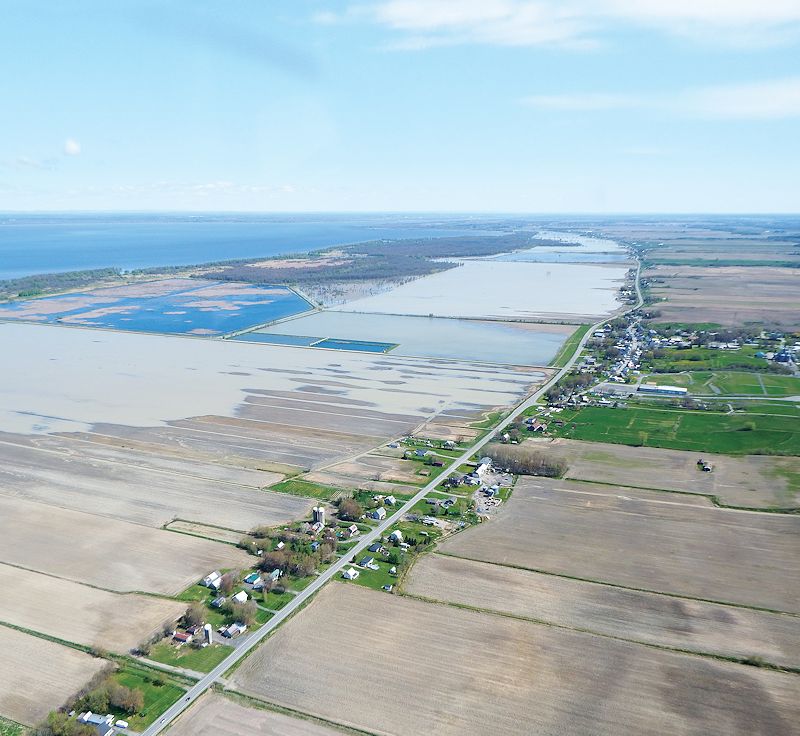
Since the 1980s, maize and soybeans have grown in the floodplain. Some 5,000 hectares and more than two hundred holdings are concerned. Fertilizers, pesticides, bare soil and ploughing are changing a space that should be used in spring as spawning habitat and a nursery for fish.
The floodplain
To spawn, yellow perch needs shallow water and flooded vegetation to fix its eggs. A ploughed field offers neither stems nor shrubs. The sediments and nutrients brought to the lake also transform some waters into an opaque soup, poor in habitat.
The Lake Saint-Pierre Regional Consultation Table proposed a wildlife-agriculture cohabitation plan. Among the tracks: stop tilling in the coastal area, maintain vegetation cover, test crops adapted to floods and restore the most sensitive areas.
At the Bayonne Farm, Michel Forget and his family already practice the minimum tillage, direct soy seeding and strip tillage for corn. They say they are ready to experiment, provided that a cover plant is suitable in the middle and that change does not endanger the company.
Who will pay for the restoration?
The contradiction is also regulatory. Crops continue in an area where several environmental rules should limit work. However, producers receive fertilization plans and administrative signals that maintain tolerance. Each then returns responsibility to the other.
Farmers recall that the lake does not have one opponent. Waves of large vessels erode the banks, the channel is dredged and upstream structures influence water levels. Roger Michaud, a commercial fisherman, refused to throw all the stones into the agricultural world, even though the moratorium had taken away a large part of his income.
The question remains of the collective contract. Should we buy land, compensate ecological services, pay for a transition or ban certain crops? Restoring the coast requires a stable policy, measurable goals and a viable solution for those who work on these soils. At midnight minus five, inaction is also an expensive choice.
The original publication
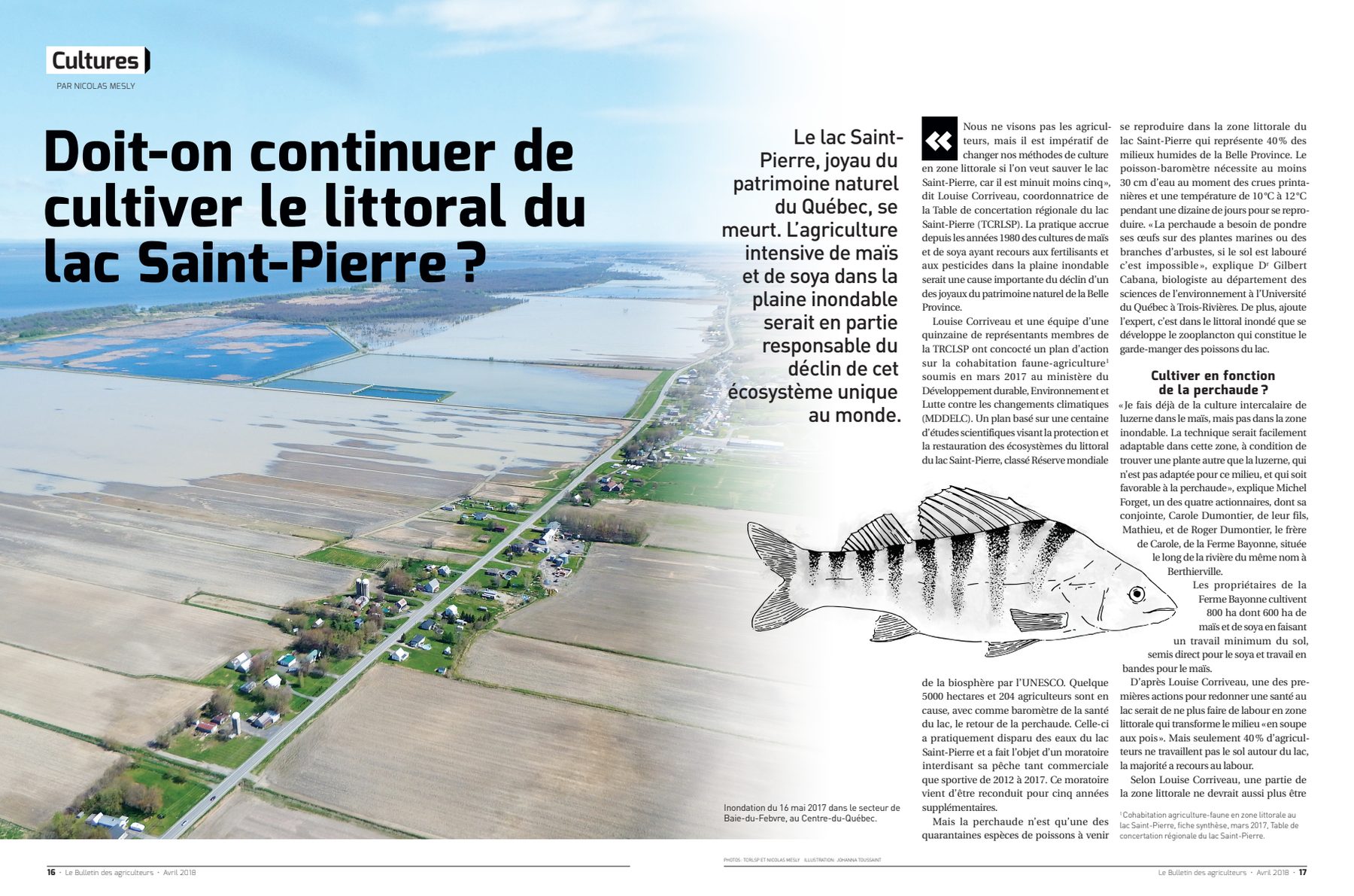
Browse the publication in its original editorial design. The complete PDF is available at the end of the story.

Open the original document
View the story in its original editorial design.
View the original publication ↗